Is Gluten-Free Bread Safe for Babies?
When can a baby start eating gluten-free bread?
Babies can start eating gluten-free bread once they have begun solid foods, typically around 6 months. Wait for the readiness signs: your baby can sit up with little support, holds their head steady, reaches for food and brings it to their mouth, and no longer pushes food out with their tongue.
Gluten-free bread suits babies who avoid gluten for family or medical reasons. If celiac disease runs in your family, ask your doctor before introducing any bread, gluten-free or not. Readiness matters more than the calendar.
- Start with small pieces of soft bread, not a whole slice.
- Offer bread alongside other first foods rather than as the first meal.
- Stay with your baby while they eat, every time.
- Hold off on bread if your baby is tired, upset or unwell.
Which gluten-free flours work best for babies?
Mild, finely milled flours suit a baby's first breads best: white rice, millet, certified gluten-free oat and corn. They taste neutral and bake into a soft crumb. Start with one flour at a time so you can spot any reaction.
- White rice flour gives a light, soft crumb and is the gentlest base for first loaves.
- Millet flour adds a mild sweetness and works well blended half and half with rice flour.
- Certified gluten-free oat flour makes a moist slice, but check the label for the certification mark.
- Corn flour or fine cornmeal brings a soft texture when mixed with rice flour.
- Use high-fibre flours such as buckwheat, teff or coconut in small amounts only, as they taste strong and can be heavy for a baby.
Keep strong flours to about one quarter of the blend. If your baby has a diagnosed allergy or celiac disease, check the flour choices with your doctor before baking.
Which additives should you check on the label?
Gluten-free bread often contains additives that stand in for wheat, so read the ingredient list before you buy a loaf for a baby. Xanthan gum and guar gum are common binders. They are allowed in food, but they can have a laxative effect in large amounts, and a baby's portion is small, so keep an eye on how much bread your child eats in a day.
Check for added sugar and salt too. Many commercial loaves carry both for flavour and shelf life, and a baby's kidneys handle salt less well than an adult's do. Look for a short list with no sugar or salt near the top, and pick a loaf with the fewest ingredients you recognise.
- Xanthan and guar gum: binders that hold the crumb together, fine in small amounts.
- Added sugar: listed as sugar, dextrose, or syrup, best kept low for babies.
- Salt: check the sodium line and choose the lowest you can find.
- Certification mark: a gluten-free seal from a recognised body means the product was tested.
- Starches and flours: rice, tapioca, and potato are common, check for anything your baby has not tried.
If your baby has celiac disease or another medical concern, check labels carefully and ask your doctor before adding any new bread to their diet.
How do you serve gluten-free bread to reduce choking risk?
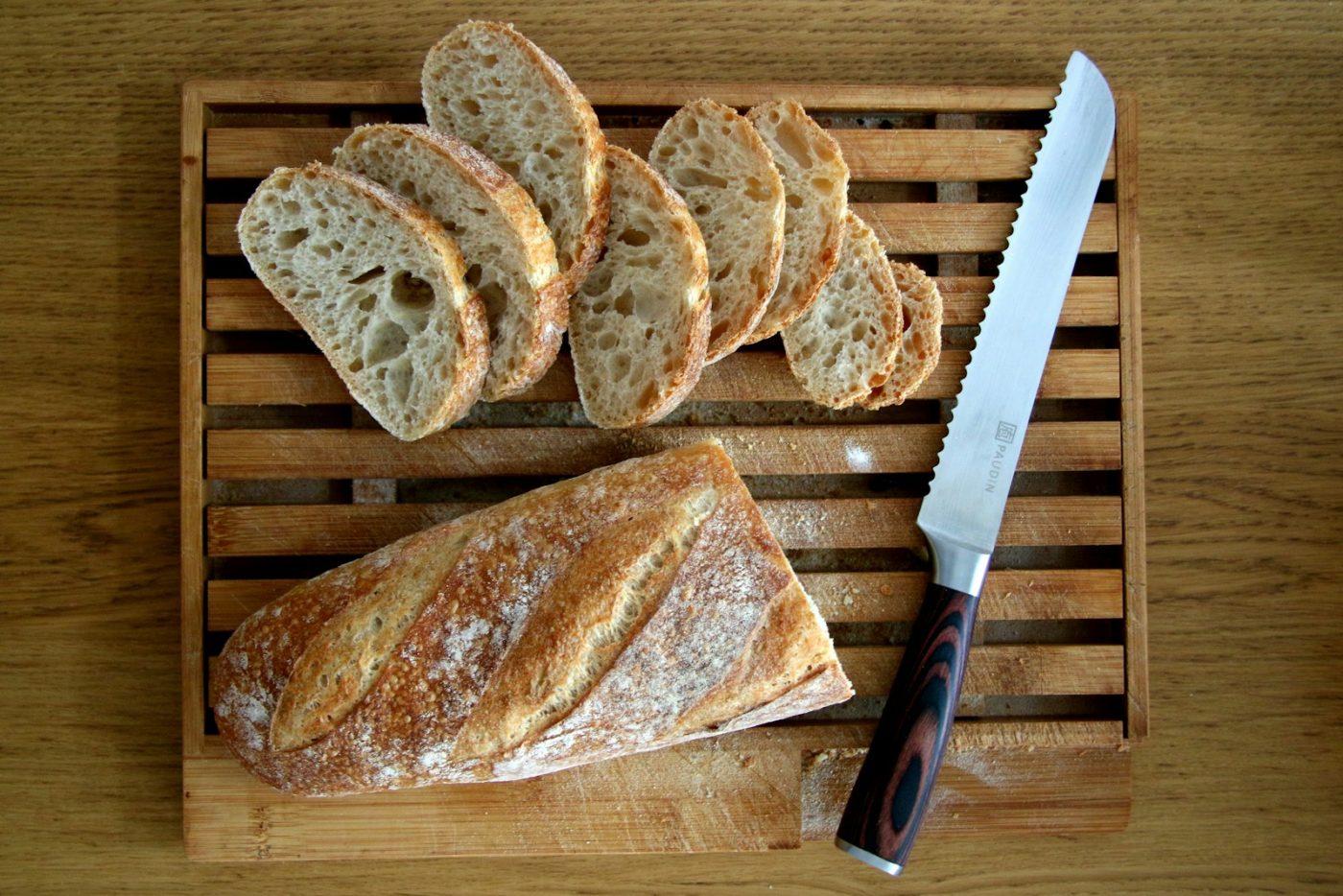
Gluten-free bread tends to be drier and crumblier than wheat bread, so shape and moisture matter as much as the recipe. For a baby around 6-9 months, cut soft bread into finger-length strips about the width of two adult fingers. Remove the crust, which is often the driest and hardest part.
From roughly 9-12 months, move to small bite-sized pieces, around the size of a pea, once a pincer grip appears. Lightly toast the bread and moisten it with a little breast milk, formula, or water so it compresses instead of shattering.
- Skip dry crusts and toasted edges that crumble into hard shards.
- Spread a thin layer of soft avocado or hummus to add moisture and grip.
- Never leave a baby eating bread unattended, and seat them upright.
- Avoid stale or frozen-then-thawed slices, which break into brittle pieces.
Can you bake gluten-free bread at home for a baby?
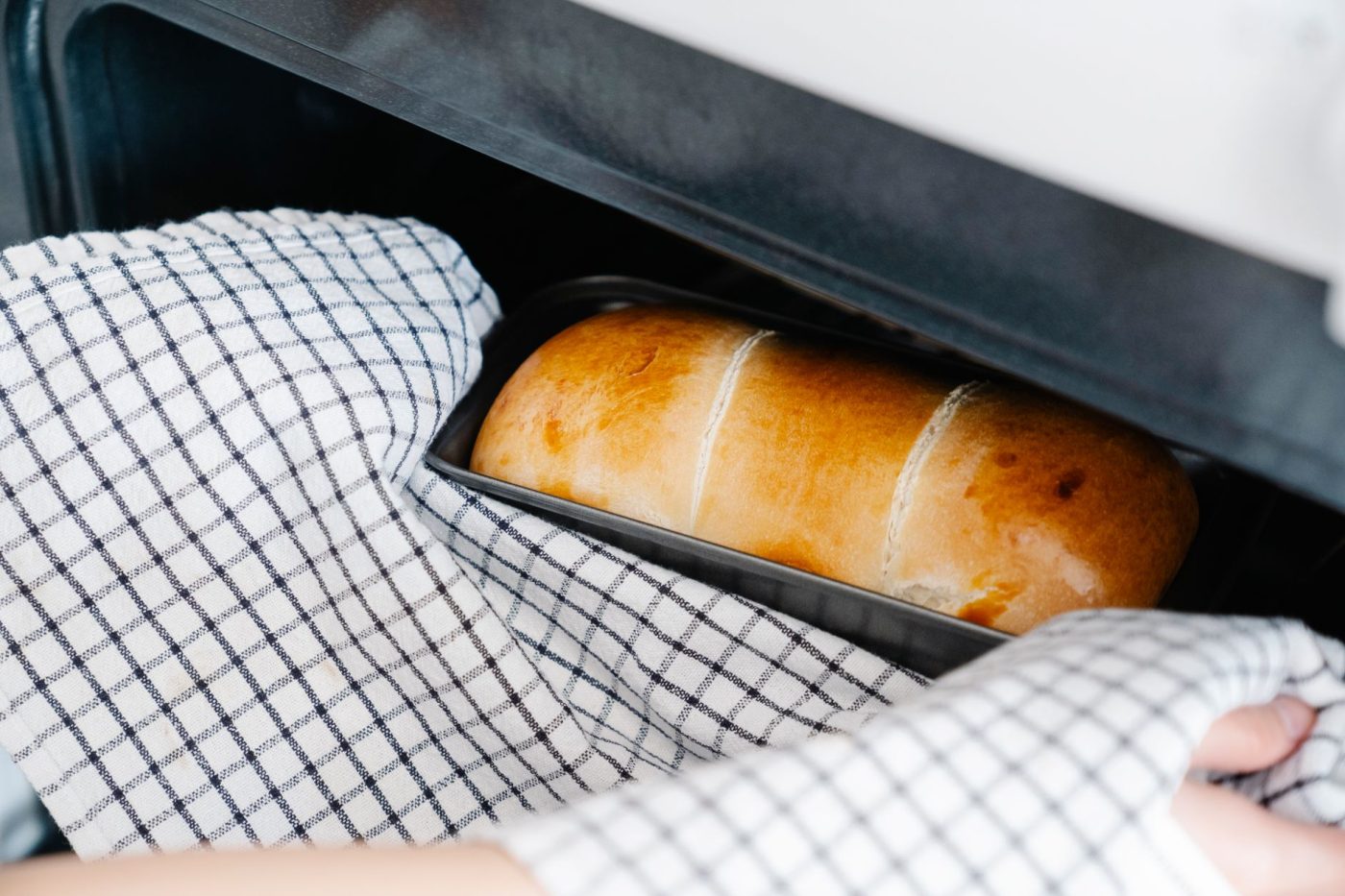
Yes. A simple loaf is easier than most people expect. Start with a tested blend rather than a single flour: 1 cup (140 g) white rice flour, 1/2 cup (60 g) tapioca starch and 1/2 cup (60 g) potato starch, plus 1 tsp xanthan gum per cup of blend. A single flour such as rice alone bakes into a dry, crumbly slice a baby cannot manage.
Introduce egg and dairy on their own before they appear in a loaf. Give a little cooked egg or plain yoghurt separately on a calm day, so a reaction is easy to spot and you know which food caused it. If your baby already eats both, 2 eggs and 3/4 cup (180 ml) milk or fortified plant milk work well in one 9×5 inch loaf.
- Weigh the flour blend on a scale. Scooping with a cup varies by 20 g or more and changes the crumb.
- Use warm liquid, around 110 F (43 C), and 2 1/4 tsp instant yeast for a soft rise.
- Add 2 tbsp oil and 1 tsp psyllium husk to hold moisture for two days.
- Bake to 200 F (93 C) in the centre, then cool fully before slicing.
What about cross-contamination in a family kitchen?
A shared toaster is the biggest risk in most homes: crumbs from wheat bread stay in the slots and land on the next slice. Use a separate toaster for gluten-free bread, or toast it in a clean oven on foil. Keep a dedicated cutting board and knife too, and wash them with hot soapy water before each use.
Store the baby's gluten-free loaf in a sealed bag or box on its own shelf, away from open flour and wheat crumbs. Wipe the counter before you slice, and never dip a knife back into a butter or jam jar after it has touched wheat bread.
- Keep a separate toaster or toast gluten-free slices on foil in the oven.
- Use one cutting board and knife only for gluten-free bread.
- Store the loaf sealed and apart from wheat flour and crumbs.
- Wipe the counter and wash utensils before every slice.
FAQ
Is gluten-free bread healthier for babies?
No. Gluten-free bread is not automatically healthier; it is simply made without wheat, barley, or rye. For a baby without a medical reason to avoid gluten, ordinary bread can be fine. Ask your doctor before making big diet changes.
Can a baby eat gluten-free bread every day?
Yes, in moderation as part of a varied diet. Bread should not replace other foods, and many gluten-free loaves are low in fibre and high in starch. Offer fruit, vegetables, and protein alongside it.
Does gluten-free bread cause choking more often?
Gluten-free bread can be drier and crumblier, which raises choking risk if served plain. Moisten it with a little water, milk, or puree, or toast it lightly, and always supervise your baby while they eat.
Should I check with a doctor before giving gluten-free bread?
Yes, if your baby has celiac disease, a diagnosed sensitivity, or any digestive symptoms. A doctor or dietitian can confirm what is safe and help you plan a balanced diet.