
Shoulder Injuries in Commercial Kitchens and Bakeries: What Staff Should Know
Anyone who has worked a busy dinner rush knows the motion by heart: reaching overhead for a sauté pan, hoisting a stockpot off a high shelf, plating dozens of orders with the same repeated arm movement for hours. None of that feels dangerous in the moment. Over months and years, it adds up.
Shoulder problems are one of the most common injuries kitchen staff eventually deal with, and they rarely show up as a single dramatic accident. If a shoulder injury has already started interfering with your work, understanding your workers’ comp options for a shoulder injury is worth doing before the pain gets bad enough to force time off.
Why Kitchens Are Hard on Shoulders
Occupational research on shoulder disorders consistently points to the same risk factors that show up in nearly every commercial kitchen: repeated overhead reaching, awkward static postures, and lifting heavy loads with the arm extended. A review of shoulder disorders and occupation found that jobs combining these movements carry a meaningfully higher risk of rotator cuff and tendon problems than jobs that don’t.
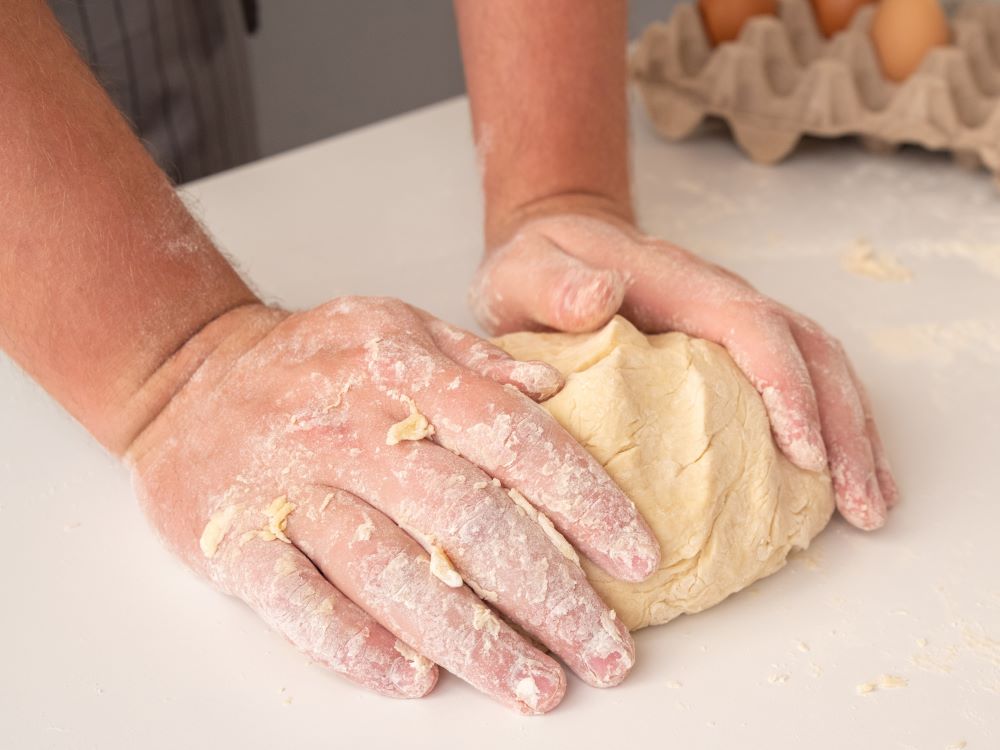
Line cooking checks nearly every box on that list, and bakery work adds its own version of the same strain. Kneading dough by hand, hoisting sheet pans in and out of a hot oven all day, and lifting flour sacks off a high shelf all put the shoulder through the same repeated motion a restaurant line does, just with different tools.
Common Kitchen-Related Shoulder Problems
A few conditions tend to show up more than others among back-of-house staff:
- Rotator cuff tendinitis from repeated overhead motion
- Bursitis from constant lifting and reaching
- Impingement syndrome from working with elevated arms
- Strain injuries from lifting heavy pots or supply cases
Why These Injuries Often Get Ignored Too Long
Kitchen culture doesn’t leave much room for slowing down. A sore shoulder gets worked through, iced after a shift, and mentioned to nobody. By the time it’s bad enough to see a doctor, it’s often been building for months, which can complicate both treatment and any later claim about when and how the injury actually started.
Reporting shoulder pain early, even before it feels serious, creates a paper trail that matters if the injury eventually needs more than rest and ice. A short note to a manager and a visit to a doctor can save a lot of friction later.
Simple Changes That Actually Help
Kitchens rarely get redesigned overnight, but a few adjustments reduce strain without slowing service down:
- Storing heavy or frequently used items between waist and shoulder height (see this site’s guide to specifying commercial kitchen shelving for how to plan that layout)
- Using rolling carts instead of carrying stacked cases
- Rotating staff through different stations during long shifts
- Reporting shoulder pain as soon as it starts, not after it worsens
None of these fixes require new equipment. They just require treating shoulder strain as a real occupational hazard instead of an inevitable part of the job.